

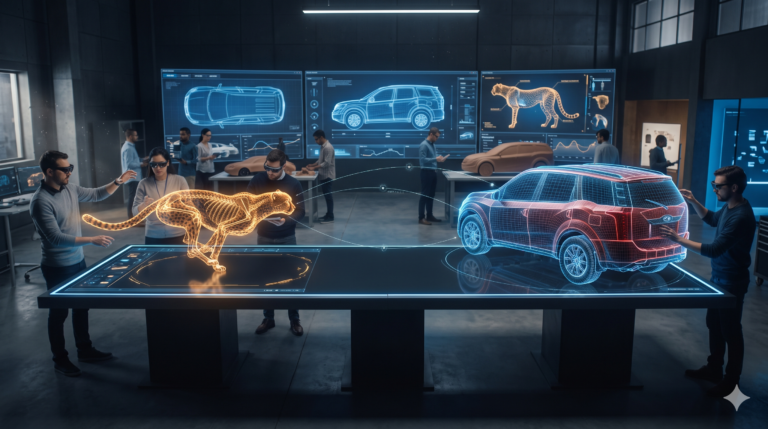
What Can a Cheetah Teach Us About Designing a Better SUV?
A cheetah and an SUV have almost nothing in common. One is a wild animal built by nature for speed, agility, and survival; the other is a machine engineered to transport people across cities, highways, and challenging terrain. Yet, when designers look beyond the obvious differences, they can discover something remarkable: nature may hold the inspiration for products that stand out in ways conventional thinking cannot easily achieve.
Consider the challenge of designing an SUV in a competitive automobile market. Every manufacturer wants its vehicle to look powerful, feel desirable, and leave a lasting impression. Designers experiment with bold grilles, sculpted body panels, distinctive headlamps, and muscular proportions. But when every competitor is trying to achieve the same things, how can one vehicle develop an identity of its own? What if the answer lies not in studying another SUV, but in observing a cheetah?
This is where the story of the Mahindra XUV500 becomes interesting. The vehicle’s distinctive design is widely associated with cheetah-inspired styling, from its assertive front-end expression to its characteristic claw-like detailing along the sides. Rather than viewing the cheetah merely as an animal, we can use it as a lens through which to understand how ideas from one world can inspire design decisions in another. Mahindra itself described the XUV500 as a cheetah-inspired SUV, and its design was recognised in the India Design Mark catalogue for its ability to evoke speed even while standing still.
The more interesting question, however, is not simply how a cheetah can inspire a car’s appearance. It is how changing the way we look at a problem can reveal design possibilities we might otherwise never consider.
This way of thinking is known as Metaphor Reframing. It involves stepping outside the familiar boundaries of a problem, borrowing a perspective from an apparently unrelated subject, and translating its underlying characteristics into new possibilities. The objective is not to copy nature or create something unusual for the sake of attention. It is to challenge familiar assumptions, discover a fresh direction, and turn that perspective into meaningful value for people and businesses.
The XUV500 offers a compelling starting point for exploring this approach. Its cheetah-inspired design association helps us understand how a metaphor can inform a product’s visual identity and the emotions it seeks to communicate. More importantly, it raises a question every product designer, innovator, and entrepreneur should consider: What might we create if we stopped looking at our problems in the usual way?
What Is Metaphor Reframing, and What Problem Does It Solve?
Metaphor Reframing is a creative thinking approach that helps us understand a familiar problem through a different lens. It involves taking characteristics, principles, or behaviours from one subject and applying them to another to discover new ways of thinking and designing. The source of inspiration could be an animal, a natural phenomenon, a human behaviour, a sporting activity, a building, or even an everyday object.
For example, imagine a team designing a new office chair. If the team begins by studying existing chairs, it will probably explore familiar features such as cushioning, lumbar support, adjustable armrests, and reclining mechanisms. These are important considerations, but the team may remain within the boundaries of conventional chair design. Now imagine reframing the challenge with a different question: What can a tree teach us about supporting the human body? This perspective might inspire ideas about a stable foundation, a flexible trunk, branching support, and the ability to adapt to different conditions. The tree does not provide a finished chair design; it introduces a new set of possibilities.
That is the power of Metaphor Reframing. It changes the way we interpret a problem before we attempt to solve it. Instead of asking only how an existing product can be improved, we begin asking what the product could learn from something entirely different.
This approach is especially valuable when teams repeatedly generate similar ideas, products lack a distinctive identity, customers struggle to understand a product’s value, or a brand needs to communicate a specific personality. It can also help teams translate abstract objectives such as trust, agility, simplicity, or confidence into tangible design choices.
The challenge it addresses is not a lack of creativity alone. Often, the real limitation is the perspective through which a problem is being viewed. When the frame remains unchanged, the solutions tend to follow familiar patterns. Reframing the problem opens the door to alternatives that may otherwise remain invisible.
The Mahindra XUV500: Looking Beyond the Conventional SUV
When Mahindra began developing the XUV500, the ambition was to create a global SUV with a distinctive identity. Ramkripa Ananthan and her design team explored the theme of “feeling the power” while working towards a vehicle that could stand apart from more conventional utility-vehicle designs.
The team developed nine exterior concepts and 17 interior concepts. According to contemporary reporting, the sixth exterior concept featured the silhouette of a pouncing cheetah and its powerful rear haunches. The team also travelled to Kenya to study the animal and its natural environment.
This is the documented connection at the heart of the case study. The cheetah was not simply an animal that the finished SUV happened to resemble. Its form was part of the team’s exploration of how to express the vehicle’s character.
Its cheetah-inspired styling became one of its most recognisable characteristics. The front-end expression, sculpted bodywork, muscular wheel arches, and claw-like side detailing contributed to a design that communicated strength and athleticism. The overall effect was intended to evoke the qualities associated with a cheetah rather than simply reproduce the animal’s appearance.
Why is this an interesting case of Metaphor Reframing? Because the cheetah belongs to a completely different context from the automobile industry, yet its characteristics offer a meaningful vocabulary for designing a vehicle. A cheetah communicates alertness through its gaze, agility through its physique, and controlled power through its posture. These qualities can inform the desired personality of an SUV.
The metaphor also provides a way to connect separate design elements to one coherent idea. Instead of treating the grille, headlamps, side panels, and body proportions as isolated styling decisions, designers can consider how they contribute to the same overall impression.
It is worth distinguishing the documented facts from the interpretation developed here. Mahindra publicly identified the XUV500 as cheetah-inspired, and contemporary automotive coverage documented the development of its distinctive form. The following analysis uses that established design association to explain how metaphor-based thinking can work; it does not claim that every individual design decision resulted from a particular documented workshop or sequence of steps.
From Cheetah to Car: How a Metaphor Can Inform Design Decisions
A metaphor becomes useful when it moves beyond an interesting comparison and begins to influence real design decisions. In the XUV500 case, the cheetah offers several characteristics that help explain the vehicle’s visual language.

1. The Eyes: Creating an Alert and Confident Expression
A cheetah’s gaze and facial markings contribute to its intense, focused appearance. In automotive design, the front of a vehicle plays a similar role in shaping its visual personality. Headlamps, the grille, the bonnet, and the arrangement of front-end elements can make a vehicle appear friendly, aggressive, sophisticated, or commanding.
Through a cheetah-inspired lens, designers can explore a front end that feels focused and alert rather than generic. The objective is to create a recognisable face with a strong visual character. The XUV500’s assertive front-end styling contributed to an identity that helped distinguish it from more conventional SUV designs.
This illustrates an important principle: functional components can also communicate personality. Headlamps must illuminate the road, but their shape and placement also influence how people perceive the vehicle. Thoughtful design can satisfy a practical requirement while contributing to a larger emotional impression.
2. The Claw Marks: Turning a Natural Pattern into a Visual Signature
The XUV500’s claw-like side detailing is one of the most recognisable features associated with its design. The cheetah metaphor provides a memorable way to understand the intention behind such detailing: it evokes the animal’s physical presence and distinctive markings without requiring the vehicle to reproduce the animal literally.
This is the difference between copying an inspiration and interpreting it. A literal imitation might result in a novelty vehicle with exaggerated animal features. An abstract interpretation takes an attribute from the source and expresses it through the visual language of the product.
Distinctive detailing can become a design signature that people recognise and remember. When integrated coherently into a product’s form, it can help differentiate the product from competing alternatives and contribute to brand identity.
The same principle can be applied to other categories. A running shoe might translate the idea of a bird’s wing into a flowing silhouette, while a smartwatch might draw on the geometry of a mountain ridge to create a distinctive case or interface. The metaphor becomes valuable when it produces a meaningful design decision rather than a decorative resemblance.
3. The Body: Balancing Strength with Agility
A cheetah combines muscular strength with a streamlined physique. Its body communicates readiness for movement rather than sheer bulk. These characteristics offer a useful perspective for designers considering how an SUV can communicate both substantial presence and athleticism.
The XUV500’s sculpted bodywork and muscular proportions contributed to a visual identity that was more expressive than a purely utilitarian interpretation of an SUV. The vehicle communicated confidence and presence while retaining the familiar form of a practical passenger vehicle.
The metaphor encourages designers to explore how proportions, directional lines, wheel arches, and surface transitions can influence perception. Rather than simply making a vehicle look bigger or heavier, a team can investigate how its form might suggest energy and movement.
This is a design interpretation, not a claim that the metaphor itself determines performance. Actual acceleration, handling, stability, and aerodynamics depend on engineering, materials, and testing. The metaphor informs the desired design intention; technical disciplines determine how the finished vehicle performs.
4. The Overall Impression: Designing an Emotion, Not Just a Shape
A metaphor becomes particularly powerful when individual design elements work together to express a consistent idea. If the front end communicates alertness, the body suggests agility, and the side detailing evokes strength, the vehicle can create a unified impression rather than appearing as a collection of unrelated styling choices.
This is where product design connects with branding. Customers do not necessarily analyse every design detail, but they can form an overall impression of a product’s personality. A coherent visual language can make that impression more memorable and help distinguish the brand in a crowded market.
The cheetah-inspired XUV500 demonstrates how a natural reference can provide a vocabulary for discussing that personality. Instead of asking only whether each component looks attractive, a design team can ask whether the components collectively express the intended character.
That does not mean visual identity alone guarantees commercial success. Price, reliability, performance, safety, comfort, customer service, and competitive positioning all influence purchasing decisions. The metaphor contributes to one part of a broader product experience.
Beyond the XUV500: Where Else Can Metaphor Reframing Create Value?
The MacBook Air: A Powerful Metaphor in Product Communication
When Steve Jobs introduced the MacBook Air in 2008, he demonstrated its remarkable thinness by pulling it out of a standard manila office envelope. Instead of simply announcing the laptop’s technical specifications, he used a familiar everyday object to help the audience immediately understand what made the product special. The envelope transformed an abstract measurement into a tangible, memorable experience.

This is a powerful example of Metaphor Reframing in Product Communication. The envelope did not necessarily inspire the laptop’s design; it helped communicate the value of that design in a way people could instantly visualise. Rather than asking customers to understand millimetres and technical specifications, Jobs gave them a simple comparison that made the innovation meaningful.
The lesson for product designers and marketers is clear: don’t just communicate what your product does differently; help people understand why that difference matters. A familiar metaphor can turn a technical feature into a compelling customer benefit.
How Lamborghini Used the Bull to Build a Powerful Brand Identity
When Ferruccio Lamborghini established his car company in 1963, he chose the bull as its emblem. According to Lamborghini’s official history, the choice reflected his zodiac sign, Taurus, and his self-description as being as strong as a bull.

The bull became more than a logo. As a metaphor, it communicates strength, aggression, confidence, determination, and an untamed spirit – qualities that fit the identity Lamborghini wanted its high-performance cars to project. The company also named several models after famous fighting bulls, reinforcing this connection between the animal and the brand
This is a useful example of Metaphor Reframing in Brand Design. Unlike the Mahindra XUV500, where the cheetah is associated with the vehicle’s styling, Lamborghini uses the bull primarily to shape brand identity and customer perception. It demonstrates that a metaphor does not always have to change a product’s physical form; it can change what people feel and believe about the product.
iGear KeyBee: Bringing the Nostalgia of Vintage Typewriters into Modern Technology
What if a modern wireless keyboard could bring back the charm of an old-fashioned typewriter? The iGear KeyBee explores this idea by combining the convenience of modern wireless technology with the retro styling of classic typewriters. Its vintage-inspired keys and nostalgic appearance transform an everyday computer accessory into something that evokes memories of traditional typing machines.

This is an example of Metaphor Inspiration in Product Design, where designers borrow the visual language and emotional associations of a familiar object to give a contemporary product a distinctive identity. The typewriter represents craftsmanship, tactile interaction, and the timeless pleasure of writing, while the wireless keyboard offers modern convenience. By bringing these two worlds together, the product becomes more than a tool for entering text; it becomes an expression of personal taste and nostalgia.
The lesson for product designers is that innovation does not always require inventing an entirely new form. Sometimes, reimagining a familiar object through the lens of modern technology can create a product that feels both familiar and refreshingly different.
Shinkansen: How a Kingfisher Inspired a Better Bullet Train
Sometimes, the solution to an engineering problem is not found by looking at the technology itself, but by observing how nature has already solved a similar challenge.
Japan’s Shinkansen bullet train faced a significant problem: when high-speed trains entered tunnels, changes in air pressure created loud sonic booms as they emerged. Engineers needed to reduce this noise without compromising the train’s speed and performance. The breakthrough came from an unexpected source – the kingfisher, a bird capable of diving from air into water with remarkably little disturbance.

Inspired by the shape of the kingfisher’s beak, engineer and birdwatcher Eiji Nakatsu explored how its streamlined form could inform the train’s nose design. The result was a longer, more pointed front that helped reduce tunnel pressure waves and aerodynamic noise.
This is a compelling example of Metaphor Reframing because the challenge was no longer simply about making a train faster or quieter; it became an opportunity to learn from a natural system that moved efficiently between two different environments. Rather than relying exclusively on conventional engineering approaches, the designers looked beyond their own industry to discover a new perspective. The lesson is powerful: when a problem seems difficult to solve within its existing boundaries, reframing it through an unexpected metaphor can reveal solutions that conventional thinking may overlook
Conclusion: Sometimes, Innovation Begins by Changing the Question
The Mahindra XUV500’s cheetah-inspired design association provides a memorable way to understand the power of looking at a familiar product through a different lens. The cheetah and the SUV belong to entirely different worlds, yet the animal offers a useful vocabulary for exploring alertness, agility, strength, and visual distinction. Those associations help explain how a metaphor can inform the personality a product communicates and the design decisions that support it.
The MacBook Air demonstrates how a familiar envelope can make a technical achievement instantly understandable. Lamborghini’s bull illustrates how an animal’s characteristics can become part of a brand’s personality, and the iGear KeyBee shows how the nostalgic appeal of a vintage typewriter can give a modern accessory a distinctive character. Each example applies a different form of metaphor, but all reveal the value of looking beyond conventional product boundaries.
Metaphor Reframing is not about copying an object, an animal, or an existing idea; it is about discovering the characteristics that make it meaningful and translating them into a new context. Whether the goal is to differentiate a product, communicate a benefit, create an emotional connection, or challenge an established design assumption, the process begins with curiosity and a willingness to see things differently.
The next time you face a product-design challenge, don’t limit your search for inspiration to products in the same category. Look at nature, everyday objects, human behaviour, architecture, or completely unrelated industries. Ask yourself what they can teach you about the problem you are trying to solve. Sometimes, the breakthrough you are looking for is not hidden in a better version of what already exists, but in a connection you have not yet considered.
Because designing what’s next begins with seeing what others overlook.
#MetaphorReframing #ProductDesign #DesignThinking #ProductInnovation #InnovationStrategy #ProductStrategy #Mahindra #MahindraXUV500 #Lamborghini #MacBookAir #iGearKeyBee #DesignWhatIsNext